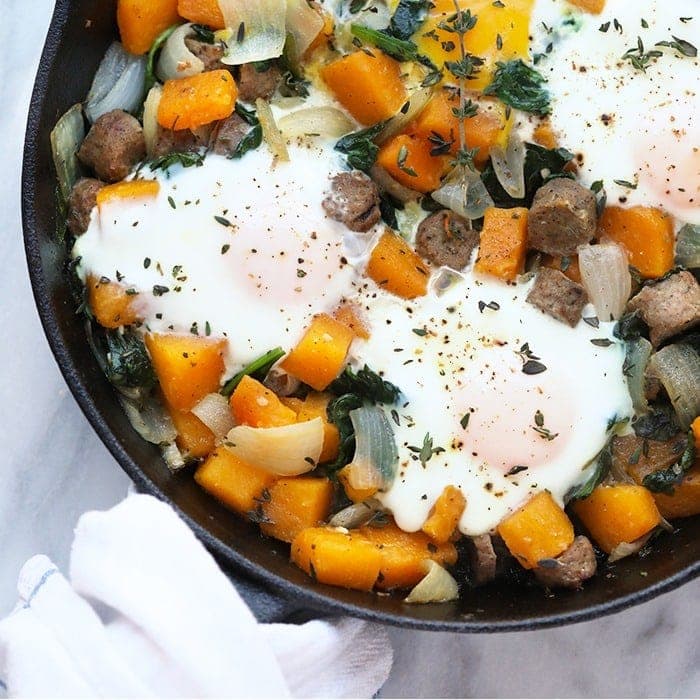
Paleo Butternut Squash Breakfast Hash: Your High-Protein Fall Favorite
As the crisp autumn air settles in and leaves begin to turn, there's an undeniable craving for warm, comforting, and hearty meals. But who says comfort food can't be incredibly nutritious and fit your dietary goals? Enter the glorious Paleo Butternut Squash Breakfast Hash with Sausage and Baked Eggs – a dish that perfectly encapsulates the essence of fall while delivering a powerful protein punch to kickstart your day.
Imagine tender, sweet butternut squash caramelized alongside savory turkey sausage, vibrant fresh spinach, fragrant garlic and thyme, all crowned with perfectly baked eggs, creating a delightful symphony of flavors and textures. This isn't just a breakfast; it's a wholesome experience designed to keep you feeling full and energized, making it an ideal choice for busy mornings or leisurely weekend brunches. Best of all, it often comes together beautifully in a single cast iron skillet, minimizing cleanup and maximizing enjoyment. If you're looking for a satisfying, high-protein fall meal that's naturally paleo and Whole30 compliant, your search ends here.
Why Butternut Squash Breakfast Hash is Your New Fall Favorite
There's a reason butternut squash takes center stage during the cooler months. Its naturally sweet, nutty flavor is incredibly versatile, lending itself to everything from soups and risottos to, yes, phenomenal breakfast hashes. Beyond its delicious taste, butternut squash is a nutritional powerhouse, packed with vitamins A and C, fiber, and potassium. In this hash, it serves as an excellent potato substitute, offering a slightly sweeter profile and a lower glycemic impact, making it a stellar choice for paleo and Whole30 lifestyles.
Paired with a high-quality breakfast sausage and protein-rich eggs, this dish transforms into a complete meal. The combination of complex carbohydrates from the squash, healthy fats, and ample protein ensures sustained energy release, helping to stabilize blood sugar and prevent those mid-morning slumps. It’s the kind of substantial, warming meal that truly fortifies you against the chill of a fall morning, providing both comfort and vital nutrients.
Crafting Your Perfect Butternut Squash and Sausage Breakfast Hash with Baked Eggs
The beauty of this dish lies in its simplicity and the harmonious blend of fresh, wholesome ingredients. While adaptable, a core set of components brings this delicious hash to life.
Essential Ingredients for a Flavorful Hash
- Butternut Squash: The star of our show. Look for a squash that feels heavy for its size and has dull skin, indicating ripeness. Its inherent sweetness perfectly balances the savory elements of the hash.
- Turkey Sausage: We often opt for lean turkey sausage for its excellent flavor and lighter profile, but the beauty of a hash is its flexibility. Feel free to use pork, chicken, or even a compliant plant-based sausage if you prefer. Just be sure to check labels for hidden sugars or non-paleo ingredients if adhering to strict dietary guidelines.
- Fresh Spinach: Not only does spinach add a vibrant pop of color and essential greens, but it also wilts down beautifully, incorporating a soft texture and a host of vitamins and minerals.
- Aromatics: Yellow onion and fresh garlic are non-negotiable for building a deep, savory foundation.
- Fresh Thyme: This herb adds an earthy, herbaceous note that truly elevates the fall flavors of the dish. Rosemary is another excellent choice if you have it on hand.
- Eggs: The grand finale! We typically recommend 4-6 large eggs, but you can adjust the quantity based on how many you’re serving and your appetite. Baking them directly into the hash creates a lovely, cohesive dish.
- Healthy Fat: Olive oil or avocado oil for sautéing.
Step-by-Step Preparation for a One-Skillet Wonder
The magic often happens in a single pan, ideally a trusty cast iron skillet. For more in-depth guidance on perfecting the one-pan method, check out our article: One-Skillet Butternut Squash Hash with Sausage & Baked Eggs.
- Prepare the Squash: Begin by carefully peeling your butternut squash with a sturdy vegetable peeler or a sharp knife. Halve it, scoop out the seeds, and then cut the flesh into uniform 1-inch cubes. This even sizing is crucial for consistent cooking.
- Crispy Squash Secret: For the crispiest squash, after cubing, spread the pieces out on a paper towel-lined baking sheet and pat them thoroughly dry. Removing excess moisture allows the squash to caramelize and crisp up beautifully when cooked.
- Brown the Sausage: In your large oven-safe skillet (cast iron is perfect here) over medium-high heat, cook the sausage, breaking it up with a spoon, until it's fully browned and cooked through. Remove the sausage, leaving any rendered fat in the pan.
- Sauté Aromatics and Squash: Add a bit of oil if needed, then toss in the diced yellow onion. Sauté until softened, about 3-5 minutes. Add the minced garlic and fresh thyme, cooking for another minute until fragrant. Now, add your prepared butternut squash cubes to the skillet. Cook, stirring occasionally, until the squash begins to soften and caramelize, about 10-15 minutes. Don't overcrowd the pan; cook in batches if necessary to ensure good browning.
- Incorporate Greens and Sausage: Stir in the fresh spinach, allowing it to wilt down into the hash. Return the cooked sausage to the pan and mix everything together.
- Add the Eggs: Create small wells in the hash and crack an egg into each well. Season the eggs lightly with salt and pepper.
- Bake or Fry: You have two options for the eggs:
- Baked Eggs: Transfer the skillet to a preheated oven (around 375°F or 190°C) and bake for 8-12 minutes, or until the egg whites are set and the yolks are cooked to your desired consistency (runny, jammy, or firm).
- Fried Eggs: Cover the skillet with a lid and continue cooking on the stovetop over low heat until the eggs are set.
Elevating Your Hash: Customization and Serving Ideas
While delicious on its own, this butternut squash hash is an excellent canvas for customization. It's incredibly versatile, allowing you to tailor it to your taste preferences or whatever ingredients you have on hand.
Flavor Boosters & Add-ins
- Cheese (if not strictly Paleo/Whole30): A sprinkle of shredded cheddar, gruyere, or crumbled feta on top after baking adds a delightful savory, salty tang. For strict paleo, consider nutritional yeast for a cheesy flavor without dairy.
- Avocado: Sliced or diced avocado on top provides a creamy texture and a boost of healthy fats. It's a fantastic cool counterpoint to the warm hash.
- Hot Sauce: For those who love a kick, a dash of your favorite hot sauce can brighten all the flavors and add an exciting zing.
- Tomatoes: Halved cherry tomatoes or diced Roma tomatoes added towards the end of cooking or served fresh on top offer a juicy, slightly acidic burst. Roasted cherry tomatoes would also be divine.
- Other Veggies: Bell peppers (red, yellow, orange for sweetness), mushrooms, or even chopped kale can be wonderful additions to the hash, adding more color and nutrients.
- Fresh Herbs: Beyond thyme, fresh rosemary or sage can enhance the autumnal feel. Fresh parsley or chives as a garnish add brightness.
For even more creative swaps and ideas to make your hash uniquely yours, explore our guide on Crispy Butternut Squash Hash: Easy Swaps & Customization Ideas.
Paleo & Whole30 Considerations
This recipe is inherently friendly for both Paleo and Whole30 diets, focusing on whole, unprocessed ingredients. The key is to be diligent with your sausage choice, ensuring it contains no added sugars, nitrates, or non-compliant additives. If strictly Whole30, remember to omit any dairy additions like cheese.
Expert Tips for the Best Butternut Squash Hash
- Don't Skip Patting Dry: This cannot be overstated. Excess moisture on the squash will steam it instead of browning it, preventing that desired caramelized, crispy exterior.
- Uniform Cubes: Cut your butternut squash into roughly 1-inch cubes. This ensures all pieces cook evenly at the same rate. Larger chunks will take longer, while smaller ones might turn mushy.
- Don't Overcrowd the Pan: When cooking the squash, ensure it has enough space in the skillet to brown. If your pan is too full, the squash will steam rather than sear, resulting in a less crispy texture. Cook in batches if necessary.
- Season as You Go: Add salt and pepper at different stages – to the sausage, to the vegetables, and finally to the eggs. This layers the flavor throughout the dish.
- Achieving Perfect Eggs: The cooking time for the baked eggs will depend on your oven and your preference. For runny yolks, aim for closer to 8 minutes; for jammy or firm yolks, go closer to 10-12 minutes. Keep an eye on them!
- Meal Prep Friendly: You can chop the butternut squash and onion ahead of time. You can even cook the sausage the night before. This makes assembly in the morning incredibly quick and easy.
Conclusion
The Paleo Butternut Squash Breakfast Hash with Sausage and Baked Eggs is more than just a meal; it's a celebration of seasonal flavors, wholesome ingredients, and satisfying nutrition. It brings together the warmth and comfort of fall with the energy-boosting power of a high-protein, paleo-friendly dish. Whether you're a seasoned chef or a kitchen novice, this one-skillet wonder is simple to prepare, incredibly versatile, and guaranteed to become a cherished part of your autumn repertoire. So, embrace the flavors of the season, gather your ingredients, and treat yourself to a breakfast that truly nourishes both body and soul.
